
Active Restoration
A biblical reset for weary pilgrims

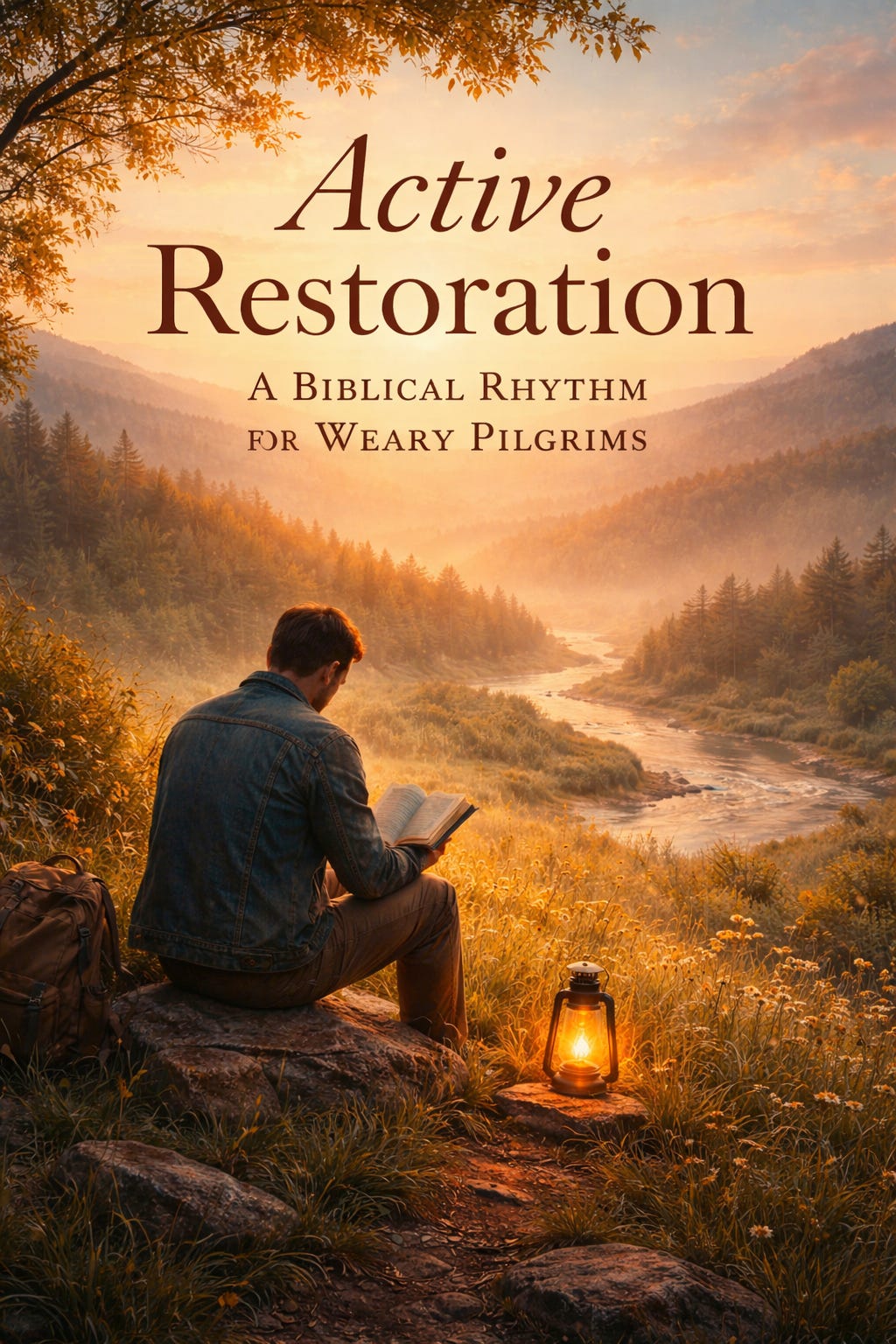
There is a kind of rest that is not idleness.
A stillness that is not sleep.
A quiet rebuilding that happens while the hands are yet moving and the heart is yet turned toward God.
Call it active restoration.
The modern term active restoration echoes what sports trainers later called active recovery — the practice of gentle movement that aids the body’s rebuilding after strain. While not coined in biblical times, the principle itself feels ancient. Scripture repeatedly shows God restoring His people not in idleness, but while they are walking deserts, tending flocks, rebuilding cities, and learning obedience step by step.
The modern mind thinks only in opposites—work or collapse, striving or escape. But Scripture paints a different landscape. The people of God are often found in motion even while they are being renewed. They walk deserts, tend flocks, rebuild walls, and sing psalms in exile. Their restoration is not always a retreat from life; it is often a redeemed way of living within it.
The Sabbath Principle — Rest with Intention
From the beginning, the Lord set a rhythm into creation itself. On the seventh day, He ceased from His labor—not from exhaustion, but to bless the pattern and declare it holy (Genesis 2:2-3). This rhythm echoes in the Ten Commandments: “Remember the Sabbath day, to keep it holy” (Exodus 20:8).
It is the only commandment from the Decalogue not explicitly repeated or commanded in the New Testament for believers under the new covenant. The other nine—against idolatry, murder, adultery, theft, false witness, coveting, and so on—are reaffirmed in various ways (e.g., Romans 13:9; Ephesians 4:28; Matthew 19:18-19). The fourth, however, is not restated as a binding command. Instead, passages like Colossians 2:16-17 release believers from judging one another over Sabbaths, holy days, or shadows of things to come, pointing instead to Christ as the substance. Jesus, the Lord of the Sabbath (Mark 2:28), fulfills it—offering us rest in Him (Matthew 11:28-30; Hebrews 4:9-10)—while the principle of intentional rest endures as a gift for human flourishing.
In the Old Testament, Sabbath was never mere inactivity. It was sacred recalibration: fields lay fallow, tools set down, families gathered, songs sung, hearts re-anchored. Life did not stop; it was rightly ordered. This was restoration with purpose.
Wilderness Restoration — Strengthened Through Dependence
When Israel wandered the desert, they did not lounge. They walked, struggled, learned hunger and thirst. Yet the wilderness became God’s training ground. Manna fell daily. Water came from rock. The pillar guided each step. Their journey itself was renewal—burning away self-reliance, forging deeper trust. Active restoration often looks like this: still moving forward, yet God quietly rebuilding foundations.
The Shepherd’s Rhythm — Work Woven with Stillness
The sheep in Psalm 23 do not dwell in permanent stillness. They graze, travel, face predators and rough terrain. Yet the Shepherd leads them beside still waters at the right moments. “He restores my soul” does not mean the journey halts. It means the soul is renewed in the midst of the journey, under divine guidance—exertion and renewal interwoven like threads in a single garment.
Rebuilding After Ruin — Restoration Through Obedience
When Jerusalem lay in rubble, God summoned His people not to despair but to rebuild: stone by stone, gate by gate. The labor was exhausting, yet profoundly restorative. As they worked with prayer on their lips and faith in their bones, their covenant identity was reborn. In the ancient pattern, restoration often arrives not before the task, but through faithful doing.
A Rhythm for Modern Pilgrims
For believers today, active restoration might look like this:
Rising early for Scripture before the day’s demands
Walking quietly beneath open skies while praying
Tending simple duties with a steady heart instead of frantic striving
Choosing obedience over hurry
Pausing regularly to remember the Lord’s faithfulness
It is not escapism. It is holy pacing.
The world urges relentless productivity or numbing distraction. But the ancient path offers another way—a steady pilgrimage in which strength is renewed as the journey continues. The Sabbath principle, rooted in creation and echoed through Scripture, invites us into intentional rhythms of ceasing and delighting, even as the New Testament shifts the focus to Christ as our ultimate rest.
The Quiet Rebuilding of the Soul
Active restoration is the recognition that God often heals us while we walk with Him, not merely when we withdraw. He restores courage in the act of trusting. Clarity in the act of listening. Strength in faithful endurance.
Like the desert wanderer sustained by manna, like the shepherded flock led beside still waters, like the builders lifting stones at dawn—we discover that restoration is not always a destination. Sometimes it is the very road beneath our feet.
And on that road, step by step, the Lord makes weary pilgrims whole again.